
Groundbreaking research has changed everything we know about brain health
For decades, dementia felt inevitable.
You either got or you didn't.
The science is now clear: up to 45% of dementia cases may be preventable through lifestyle changes. Not someday. Not with a future miracle drug. Right now, with daily habits you can start today. Mindr translates this research into action.
Our approach is built on three landmark studies that have transformed dementia prevention:
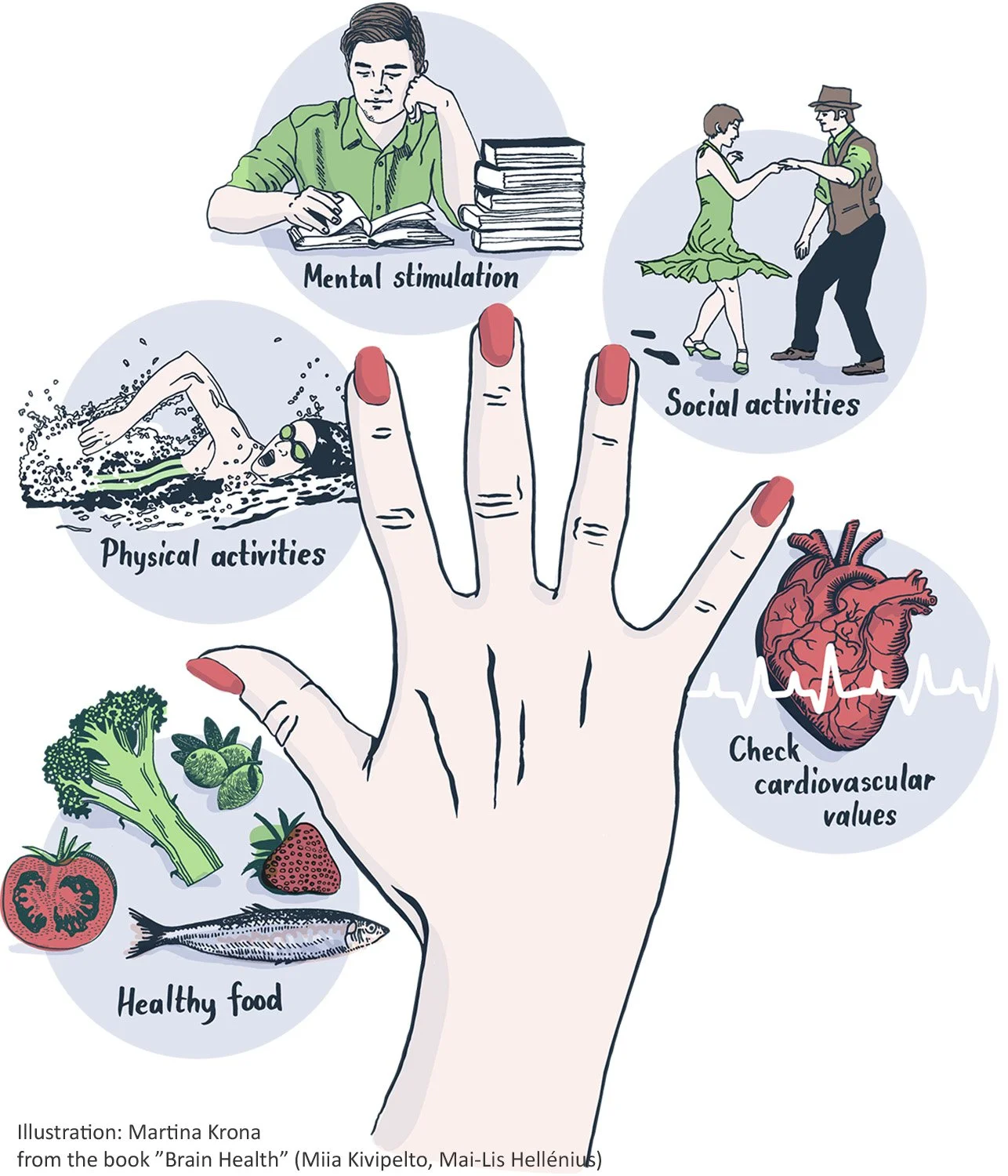
The FINGER Study
The Study That Proved Prevention Works
In 2015, Finnish researchers demonstrated for the first time that a comprehensive lifestyle intervention could significantly improve cognitive function in at-risk adults. This landmark trial became the foundation for dementia prevention worldwide.
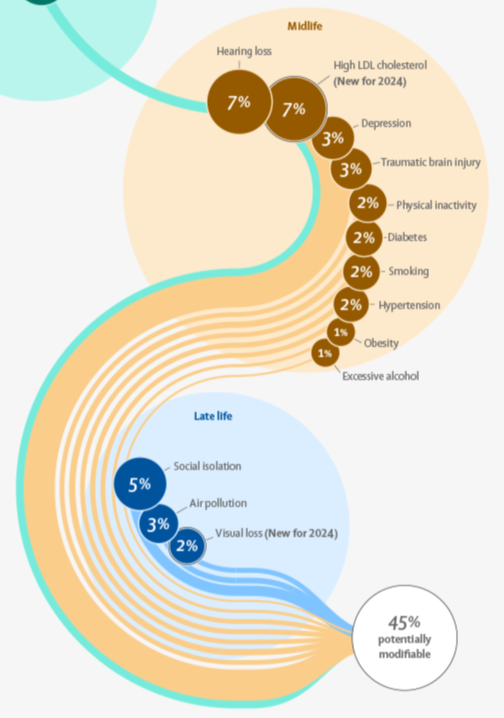
The Lancet Commission on Dementia Prevention
The Global Roadmap for ADRD Prevention
The world's leading dementia researchers identified 14 modifiable risk factors that account for 45% of dementia cases globally. Their findings have shaped public health policy around the world.
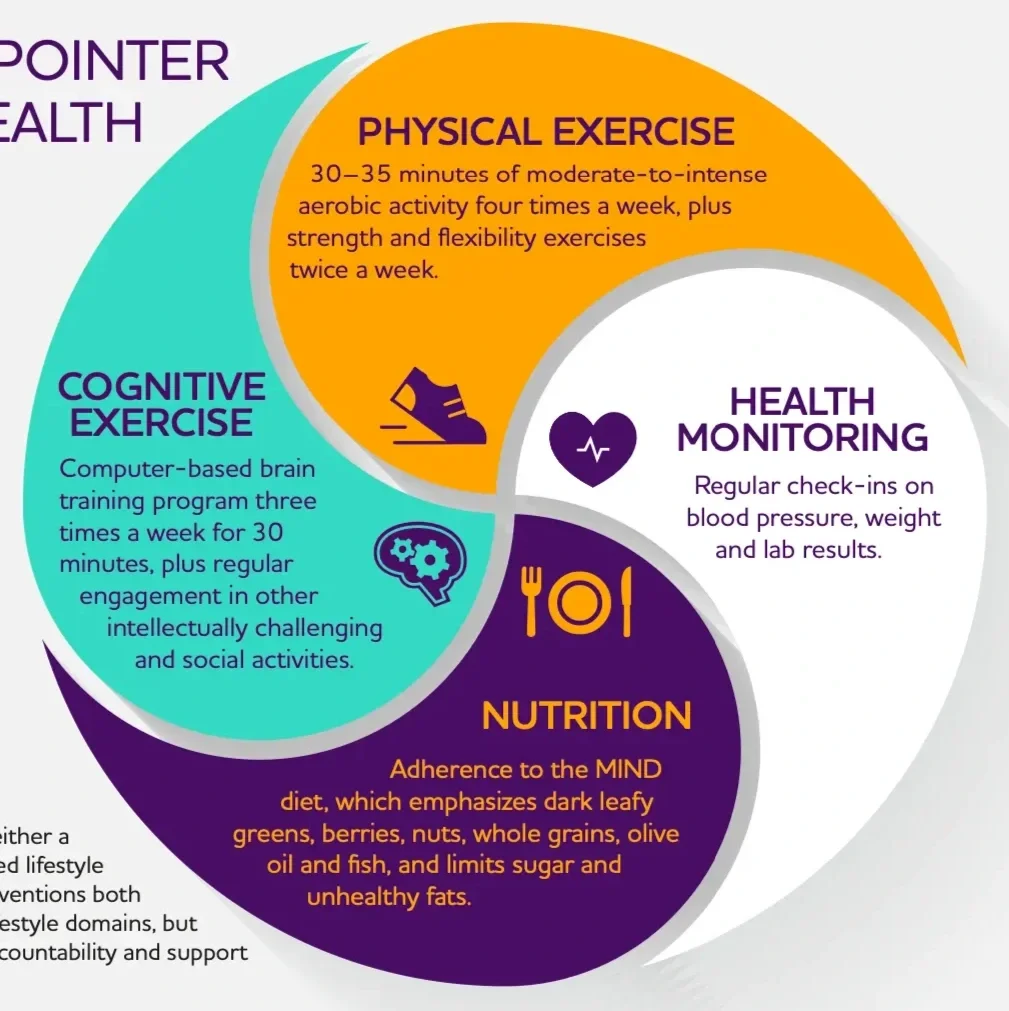
US POINTER Study
Structure & Support Make the Difference
In 2025, the Alzheimer's Association confirmed that the FINGER approach works in diverse American populations. This large-scale trial validated that structured lifestyle programs protect cognitive function and greatly outperform self-guided interventions.

Mindr Pilot Study
Science backed, multi-domain, structured and human supported: This is the Mindr Way
Before building the full Mindr platform, we delivered a digital multi-domain intervention for people at risk for cognitive impairment or with mild cognitive impairment (MCI) with the overall aim to prevent or alter cognitive decline in an easily accessible and inexpensive solution. The results speak for themselves.
88% of participants completed the 90 day program
66% of participants reported significant memory improvement
50% of participants reported improvement in # of healthy days
70% of participants reported reduction in # of days of limited activity
The results of our pilot study were presented at the Alzheimer’s Association International Conference in Amsterdam, NL, and published in the AAIC 2023 Journal.
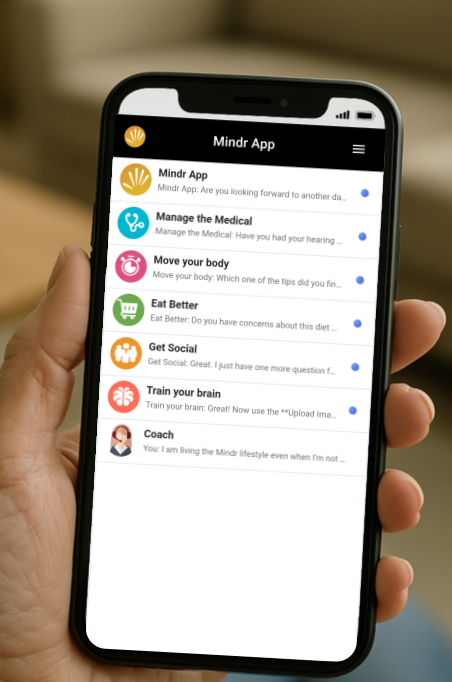
Mindr’s Approach
From Research to Your Daily Routine
Most brain health apps focus on just one of 3 basic things: puzzles, meditation, or exercise. But the research is clear: addressing multiple risk factors together is far more effective than any single intervention alone. The science shows that there are more like 16 key risk factors, not just the 3.
The FINGER trial showed that targeting diet, exercise, cognitive training, and vascular health simultaneously produced significant cognitive benefits. Mindr brings this comprehensive approach to your daily life.
-
Mental stimulation builds cognitive reserve. Mindr’s Train Your Brain activities provide daily brain exercises and learning activities.
-
Exercise increases blood flow and grows new brain cells. Mindr’s Move Your Body movement plans help you add cardio, strength, balance and flexibility to your life.
-
The MIND diet reduces dementia risk by up to 53%. Mindr’s Eat Better activities offer practical eating guidance and brain-healthy recipes.
-
Human connection protects against cognitive decline. Mindr offers real relationships with coaches and community meetings plus regular Get Social activity prompts.
-
Controlling blood pressure, diabetes, and cholesterol matters. Mindr’s Manage the Medical activities help track medical risk factors and provide important health reminders.
-
Sleep, stress, and other factors affect your brain. Mindr’s Be Well activities help you implement strategies for sleep optimization, stress management and general lifestyle medicine best practices.
Free for 2 weeks